If you have been advised to have a skin lesion removed, you may have come across the term curettage and cautery. For many patients, the name sounds more complicated than the procedure itself.
In reality, curettage and cautery skin treatment is a straightforward, commonly performed technique used to treat a range of benign and pre-cancerous skin conditions.
Understanding what curettage involves, how it compares with cryotherapy and what happens at each stage of the procedure can help you feel more prepared.
What Is Curettage and Cautery?
Curettage and cautery is a minor skin procedure used to remove certain lesions. The word curettage refers to gently scraping away abnormal tissue using a specialised surgical instrument called a curette. Cautery refers to the use of controlled heat to seal blood vessels and destroy any remaining abnormal cells.
When patients ask, “What is curettage?”, the simplest answer is that it is a method of carefully removing unwanted skin tissue without needing a full surgical excision.
The procedure is performed in-clinic under local anaesthetic and is usually completed in a single visit. Curettage and cautery skin procedures are carried out by consultant dermatologist Sacha Goolamali at The Forbury Clinic.
What Is Curettage and Cautery Used For?
Curettage and cautery is not limited to one specific diagnosis. It is used across several different skin conditions, particularly those affecting the surface layers of the skin.
Common conditions treated include:
Warts and Verrucae
Curettage may be recommended for stubborn warts and verrucae that have not responded to topical treatments. Scraping the lesion away allows for immediate removal rather than repeated applications of creams.
Seborrhoeic Keratoses
Benign, rough, “stuck-on” growths known as seborrhoeic keratoses are often suitable for curettage. These lesions are common with age and may catch on clothing or bleed.
Bowen’s Disease
For certain superficial pre-cancerous lesions such as Bowen’s disease, curettage and cautery can be an effective treatment option. In these cases, careful removal of abnormal surface cells is essential.
Molluscum Contagiosum
Clusters of viral skin bumps known as molluscum contagiosum may also be treated using curettage when they are persistent or spreading.
Because curettage and cautery skin treatment addresses superficial lesions, it is most suitable where the abnormality does not extend deeply into the skin.
How Is Curettage Different from Cryotherapy?
Patients often compare curettage cautery cryotherapy when exploring treatment options.
Cryotherapy involves freezing the lesion using liquid nitrogen. It is particularly useful for smaller or thinner lesions.
Curettage, in contrast, physically removes the lesion through scraping. Cautery is then applied to control bleeding and reduce the risk of recurrence.
In some cases, curettage may provide more immediate and complete removal compared to cryotherapy, especially for thicker or more defined lesions. The choice depends on the lesion’s size, depth and diagnosis.
What to Expect During the Procedure
Many patients ask, “Is curettage and cautery painful?” The procedure is performed under local anaesthetic. You may feel a brief sting from the injection, but once the area is numb, the treatment itself should not be painful.
The typical steps include:
- Cleansing the skin
- Administering local anaesthetic
- Gently scraping the lesion using a curette
- Applying cautery to stop bleeding and treat residual tissue
- Applying a small dressing
The entire appointment is usually completed within 30 minutes, depending on the number and size of lesions.
Because it is a minor procedure, patients can return home shortly afterwards.
Aftercare and Healing
Healing after curettage and cautery skin treatment is generally straightforward.
How Long Does Recovery Take After Curettage and Cautery?
Most areas heal in 1–3 weeks. Larger lesions may take slightly longer. The treated area typically forms a small scab, which gradually falls away as new skin develops underneath.
Does Curettage and Cautery Leave a Scar?
Any procedure that removes skin tissue carries a small risk of scarring. However, because curettage targets superficial layers, scarring is usually minimal and often fades over time.
The final cosmetic result depends on:
- The size of the lesion
- The location on the body
- Individual healing response
You will be given clear aftercare instructions, including:
- Keeping the area clean and dry
- Avoiding picking at the scab
- Monitoring for signs of infection
If redness, swelling or discharge increases rather than improves, you should contact the clinic for advice.
Is Curettage and Cautery Right for You?
Not every lesion is suitable for curettage. Deeper or suspicious lesions may require alternative approaches such as excision biopsy.
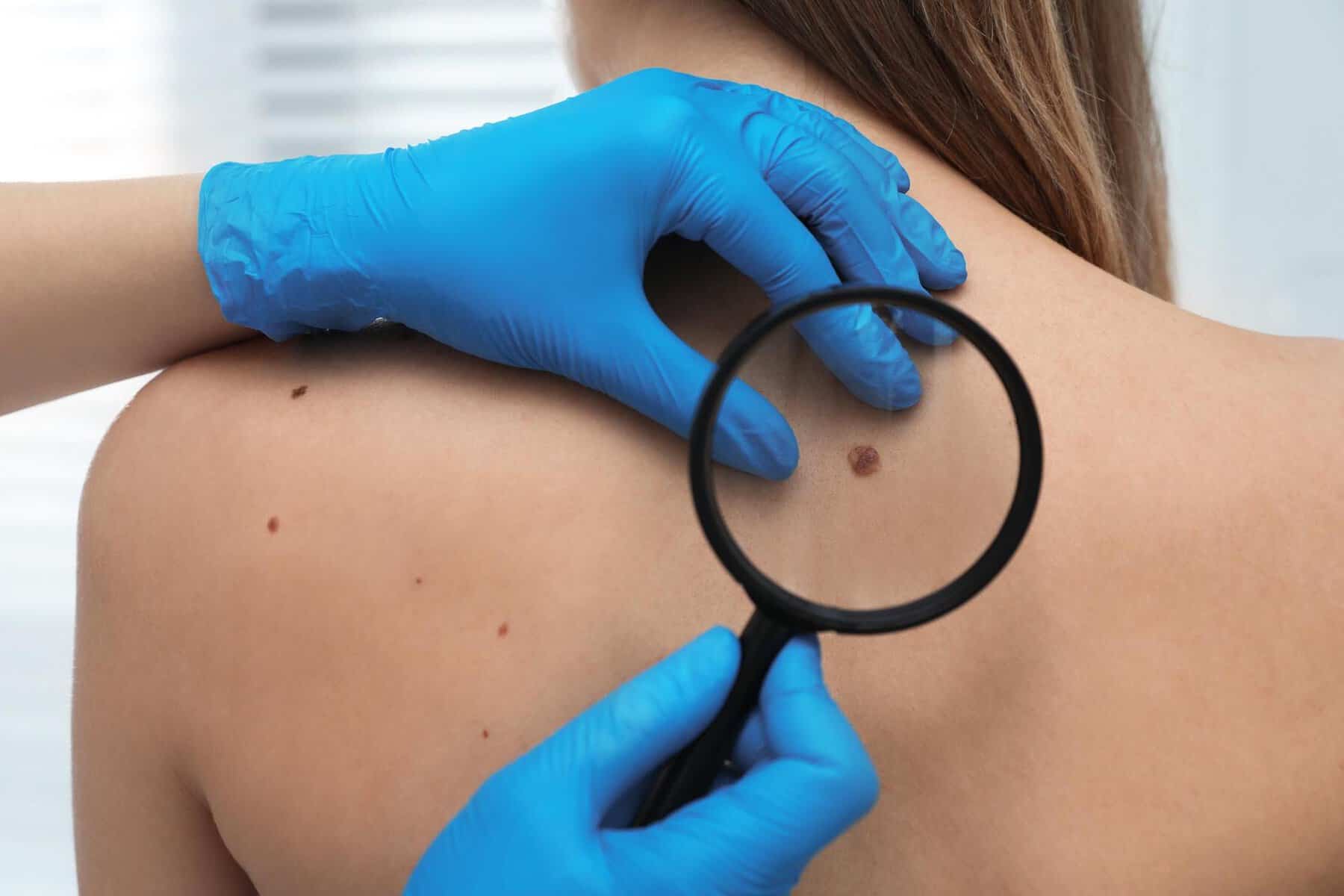
The decision is based on clinical examination. A consultant dermatologist at The Forbury Clinic assesses the lesion carefully before recommending treatment.
Because curettage and cautery skin procedures are versatile, they are often used when:
- The lesion is superficial
- Immediate removal is preferred
- Minimal downtime is desired
- Histological confirmation is not required
If histology is clinically indicated, your dermatologist will advise accordingly.
A Quick, Practical Treatment Option
One of the advantages of curettage and cautery is efficiency. It is:
- Performed in-clinic
- Completed in a single visit
- Carried out under local anaesthetic
- Suitable for a range of skin conditions
For many patients, it offers a simple solution without the need for stitches or extended recovery.
Book a Curettage and Cautery Consultation
If you have a skin lesion that has been recommended for removal, or you would like advice on whether curettage and cautery skin treatment is appropriate, book a consultation at The Forbury Clinic.
Consultant dermatologist Sacha Goolamali can assess the lesion and recommend the most suitable approach.