Skin changes are common and most moles are harmless. However, early detection remains one of the most important factors in successful treatment of skin cancer. While general awareness is essential, many patients want to know what actually happens during a screening appointment.
A skin cancer screening appointment at The Forbury Clinic includes careful examination, dermatoscopy where appropriate, and clear guidance if any concerns are detected.
Why Screening Matters
Skin cancer is one of the most common cancers in the UK. When identified early, treatment is usually straightforward and highly effective. Screening is not about assuming the worst. It is about clarity and prevention.
Many patients book screening because they:
- Have noticed a new or changing mole
- Have multiple moles and want reassurance
- Have a personal or family history of skin cancer
- Spend significant time outdoors
- Prefer proactive monitoring
If you would like broader guidance on warning signs and why early detection matters, read more about how a private dermatology clinic spots skin cancer early.
You can self-refer at The Forbury Clinic. No GP letter is required for a private skin cancer screening appointment.
What Happens During a Skin Cancer Screening?
A screening appointment is structured, calm and thorough.
Step 1: Medical History and Risk Review
Your consultation begins with a brief discussion about:
- Any recent skin changes
- Personal or family history of skin cancer
- Sun exposure history
- Previous biopsies or removals
This helps the dermatologist understand your overall risk profile.
Step 2: Full Skin Examination
You will be examined in a well-lit, clinical room. The dermatologist will assess:
- Moles
- Pigmented lesions
- Non-pigmented lesions
- Areas of concern you have identified
Patients sometimes feel anxious about a full skin examination, but it is performed respectfully and professionally.
Step 3: Dermatoscopy
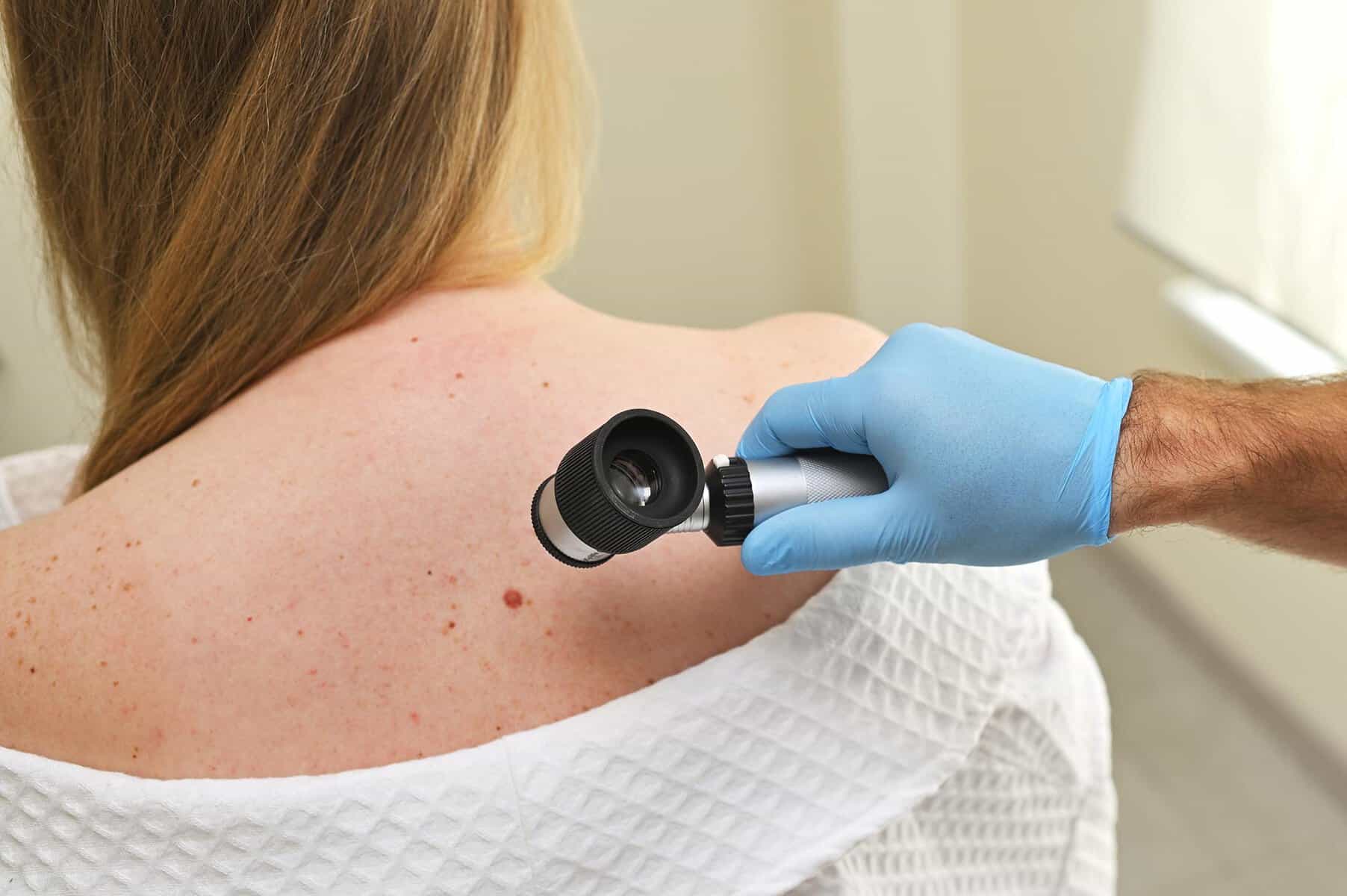
A key part of modern screening is dermatoscopy. Many patients ask: What is dermatoscopy?
Dermatoscopy involves using a handheld magnification device called a dermatoscope. It allows the dermatologist to view structures beneath the surface of the skin that are not visible to the naked eye.
Dermatoscopy improves diagnostic accuracy and helps distinguish benign moles from suspicious lesions without the need for immediate biopsy.
Consultant dermatologist Sacha Goolamali performs dermatoscopic examination as part of skin cancer screening in Reading.
Does Skin Cancer Screening Hurt?
No. Screening itself is entirely non-invasive and painless.
The appointment involves visual inspection and dermatoscopy only. If no suspicious lesions are identified, no further procedure is required.
If a lesion does require removal or biopsy, this is discussed separately and performed under local anaesthetic.
What Happens If Something Suspicious Is Found?
Most lesions examined during screening are benign. However, if something unusual is identified, the next step depends on the findings.
Options include:
- Monitoring with photography
- Dermatoscopic review at follow-up
- Biopsy
- Immediate excision
If removal is recommended, you may be advised to undergo mole removal for diagnostic purposes.
Any tissue removed is sent for histological examination to confirm the diagnosis. Results are usually available within 10 working days.
Early identification of conditions such as melanoma, basal cell carcinoma or squamous cell carcinoma significantly improves outcomes.
How Often Should You Have a Skin Cancer Screening?
There is no single schedule suitable for everyone.
General guidance suggests:
- Annual checks for those with higher risk
- Periodic review if you have numerous moles
- Prompt assessment for any new or changing lesion
If you have previously had skin cancer, your dermatologist may recommend more regular monitoring.
How to Check Your Own Skin Between Appointments
Screening appointments are important, but self-awareness between visits also matters.
Using the ABCDE rule can help identify suspicious changes:
A: Asymmetry
B: Border irregularity
C: Colour variation
D: Diameter larger than 6mm
E: Evolving or changing appearance
Pay particular attention to any mole that looks different from the rest. If you notice change, book a review rather than waiting for your next routine screening.
Who Should Consider Private Skin Cancer Screening?
You may benefit from private skin cancer screening if you:
- Have fair skin and burn easily
- Have a high number of moles
- Have a family history of melanoma
- Have previously used tanning beds
- Prefer rapid access without waiting for NHS referral
Some patients choose private screening because they want reassurance quickly. Others prefer the flexibility and continuity of seeing the same consultant.
Appointments at our private dermatology clinic can often be arranged within days.
What Makes Private Screening Different?
The key differences in a private setting include:
- Self-referral without GP gatekeeping
- Faster appointment availability
- Consultant-led examination
- Clear written documentation
- Immediate discussion of findings
If further treatment is needed, this can be arranged promptly.
Taking the Next Step
If you have concerns about a mole or simply want reassurance, booking a screening appointment provides clarity.
This page complements our existing overview of how a private dermatology clinic spots skin cancer early. Once this page is live, that blog should link here to guide readers who are ready to book.
Book Your Skin Cancer Screening in Reading
If you would like a consultant-led mole check, you can book directly with The Forbury Clinic. No GP referral is required.
Early assessment is the safest way to manage uncertainty. Whether for reassurance or investigation, skin cancer screening Reading appointments are available at short notice.
Contact The Forbury Clinic to arrange your private skin cancer screening today.