Kidney Stones Treatment in Newcastle
Kidney stones can cause intense pain, but they are very treatable and often preventable. Consultant-led assessment provides rapid imaging, the full range of stone treatments and a clear plan to reduce the risk of stones returning.

Caring for the bladder
Kidney stones are hard deposits that form inside the kidneys from minerals and salts in the urine. They may be as small as a grain of sand or large enough to fill part of the kidney.
Small stones often pass on their own. Larger stones can become lodged in the ureter, the tube that drains urine from the kidney to the bladder, and cause significant pain.
The classic symptom is sudden and severe pain in the side or lower back known as renal colic. The pain can come in waves and may spread to the lower abdomen or groin. Other symptoms can include:
- Blood in the urine
- Nausea or vomiting
- Changes in urinary pattern
Most stones are made of calcium, though other types exist. The type of stone can influence both treatment and prevention.
Dehydration, dietary factors, certain medical conditions and family history all contribute to stone formation. Management focuses not only on clearing the current stone but also on understanding why it formed.

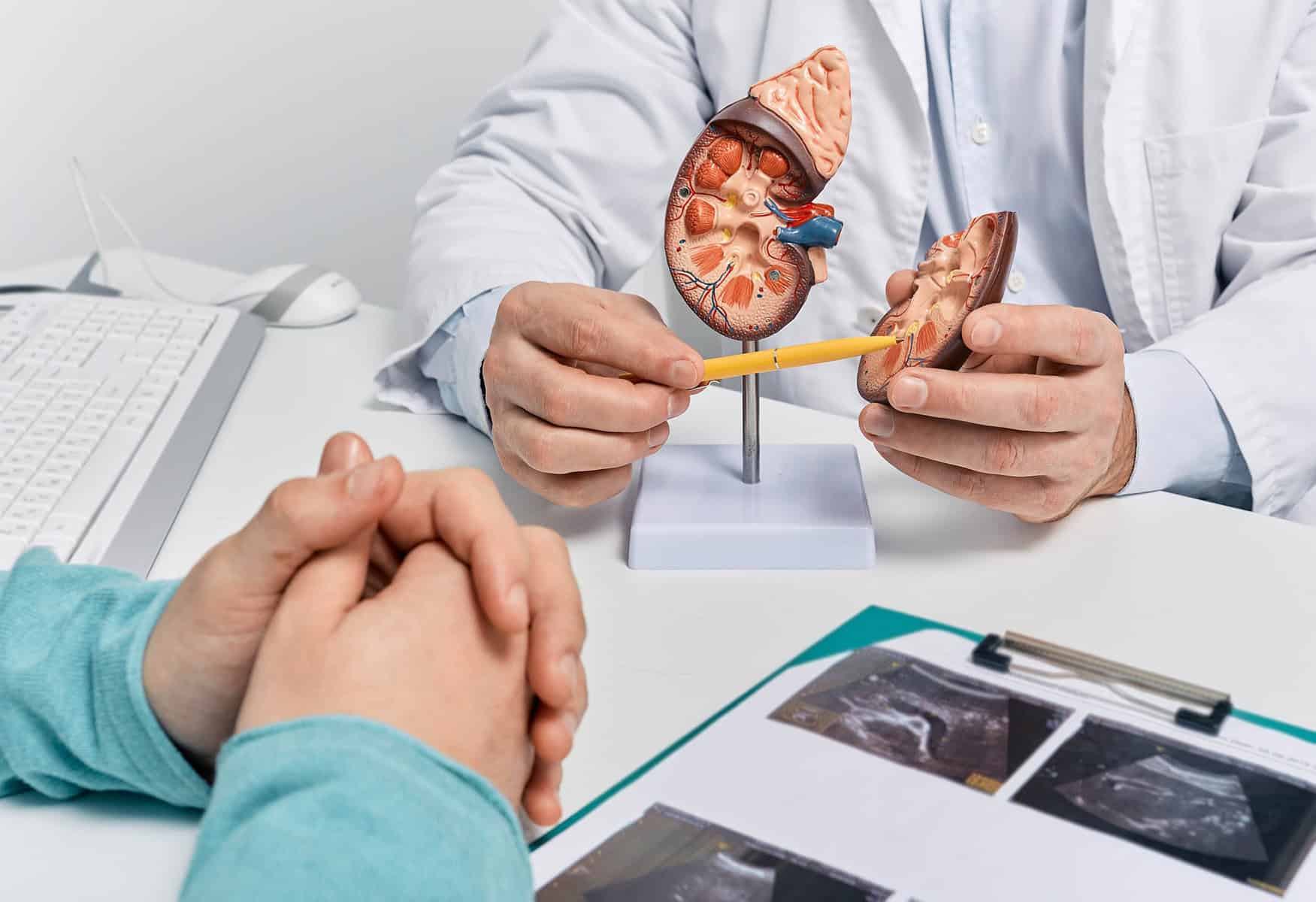
Common symptoms
Severe pain
Sudden intense pain in the side or back that may come in waves and spread to the lower abdomen or groin.
Blood and urinary changes
Blood in the urine, cloudy or strong-smelling urine and needing to pass urine more frequently.
Nausea and infection signs
Nausea or vomiting can accompany pain. Fever, shivering or feeling unwell may signal infection and require urgent assessment.
What causes kidney stones?
Several factors increase the risk of stones. Identifying yours is central to prevention.
Dehydration
Not drinking enough fluid concentrates the urine and is the most common contributing factor.
Diet
High salt intake, excess animal protein and certain dietary patterns can increase risk in susceptible individuals.
Metabolic and genetic factors
Some people have inherited tendencies or metabolic conditions that promote stone formation.
Medical conditions
Recurrent urinary infections and certain medical conditions or medications can also contribute.
How we diagnose kidney stones
Assessment combines your symptoms with targeted investigations.
Urine and blood tests
These check for infection, blood and signs of metabolic causes.
Imaging
CT scanning is commonly used to confirm the size and position of the stone. Ultrasound may also be used in selected cases. Imaging guides treatment choice and confirms whether the kidney is obstructed.
From investigation to treatment
Assessment often combines urine and blood tests with imaging such as CT scanning. Together these identify the size, location and impact of the stone.
Not every patient needs every test. Investigation is tailored to your symptoms and clinical situation rather than routine.
Treatment is matched to what is found. Small stones may be managed conservatively with fluids and pain relief. Larger or obstructing stones are treated with the most appropriate technique. Prevention is addressed alongside treatment so recurrence risk is reduced.
Our kidney stone treatments
Shockwave lithotripsy ESWL
Focused shockwaves break the stone into smaller fragments that pass naturally without incision.
Ureteroscopy and laser
A fine scope passed up the urinary tract allows a laser to break and remove the stone.
Percutaneous nephrolithotomy PCNL
Keyhole surgery through the back to remove large or complex stones in a single procedure.
Ureteric stent
A thin tube placed temporarily to keep the ureter open and drain the kidney.
Stone prevention programme
Metabolic assessment and tailored dietary and lifestyle advice to reduce recurrence.
Choosing the right treatment
There is no single best treatment for kidney stones. The correct option depends on:
- Stone size
- Stone location
- Stone composition
- Severity of symptoms
- Your general health
Small stones may pass naturally. When active treatment is needed, options range from non-invasive shockwave therapy to keyhole procedures and surgery for larger stones.
Because recurrence is common, identifying why stones formed is essential. A structured prevention plan reduces the likelihood of future episodes.
Why choose The Forbury Clinic for kidney stones treatment in Newcastle?
Full range of treatments
From non-invasive shockwave therapy to keyhole surgery, ensuring the technique fits the stone.
Rapid assessment
Prompt imaging and consultant review, which is crucial when stones are painful or obstructing the kidney.
Prevention built in
Assessment looks beyond the immediate stone to the reasons it formed, with a tailored prevention strategy.
Consultant-led direct access
Seen and treated by an experienced urologist throughout with self-referral welcome.
Frequently asked questions
Will my kidney stone pass on its own?
Many small stones pass naturally with fluids and pain relief. Larger stones or those causing obstruction usually require active treatment.
How are kidney stones diagnosed?
Diagnosis combines symptoms, urine and blood tests and imaging such as CT scanning to determine size and location.
Do kidney stones come back?
Recurrence is common. Metabolic assessment and prevention strategies significantly reduce the risk.
When is kidney stone pain an emergency?
Severe pain with fever, shivering or feeling very unwell may indicate an infected and blocked kidney and requires urgent care.
Do I need a GP referral?
No. You can self-refer and arrange a consultation directly.

Book your urology consultation today
Consultations are available to book online for patients with or without a GP referral. Our private specialists provide world-class care in a discrete environment.
- AppointmentBook a consultation
- Reception01189207055
- Location
The Beverley Hospital, The Edge, Fifth Ave, Team Valley, Gateshead NE11 0XA