Urethral Stricture Treatment in Newcastle
A urethral stricture is a narrowing of the tube that carries urine out of the body. It can make passing urine increasingly difficult. The condition is very treatable, but choosing the right treatment matters. For many men, a durable and often curative repair is preferable to repeated stretching.

What is a urethral stricture?
A urethral stricture is a narrowing of the urethra caused by scar tissue. The urethra is the tube that carries urine from the bladder out of the body. When scar tissue forms, it restricts urine flow, similar to a kink in a hose.
Strictures predominantly affect men because the male urethra is longer.
Common symptoms include:
- A slow or weak urinary stream
- Spraying or split stream
- Straining to pass urine
- A feeling of incomplete emptying
Over time, a stricture can lead to complications such as recurrent urinary infections or, in more severe cases, difficulty passing urine at all.
Strictures may develop due to:
- Injury or trauma
- Infection or inflammation
- Previous catheter use or surgery
- Skin conditions such as lichen sclerosus
- No clearly identifiable cause
The length, location and cause of the stricture influence which treatment will be most effective.

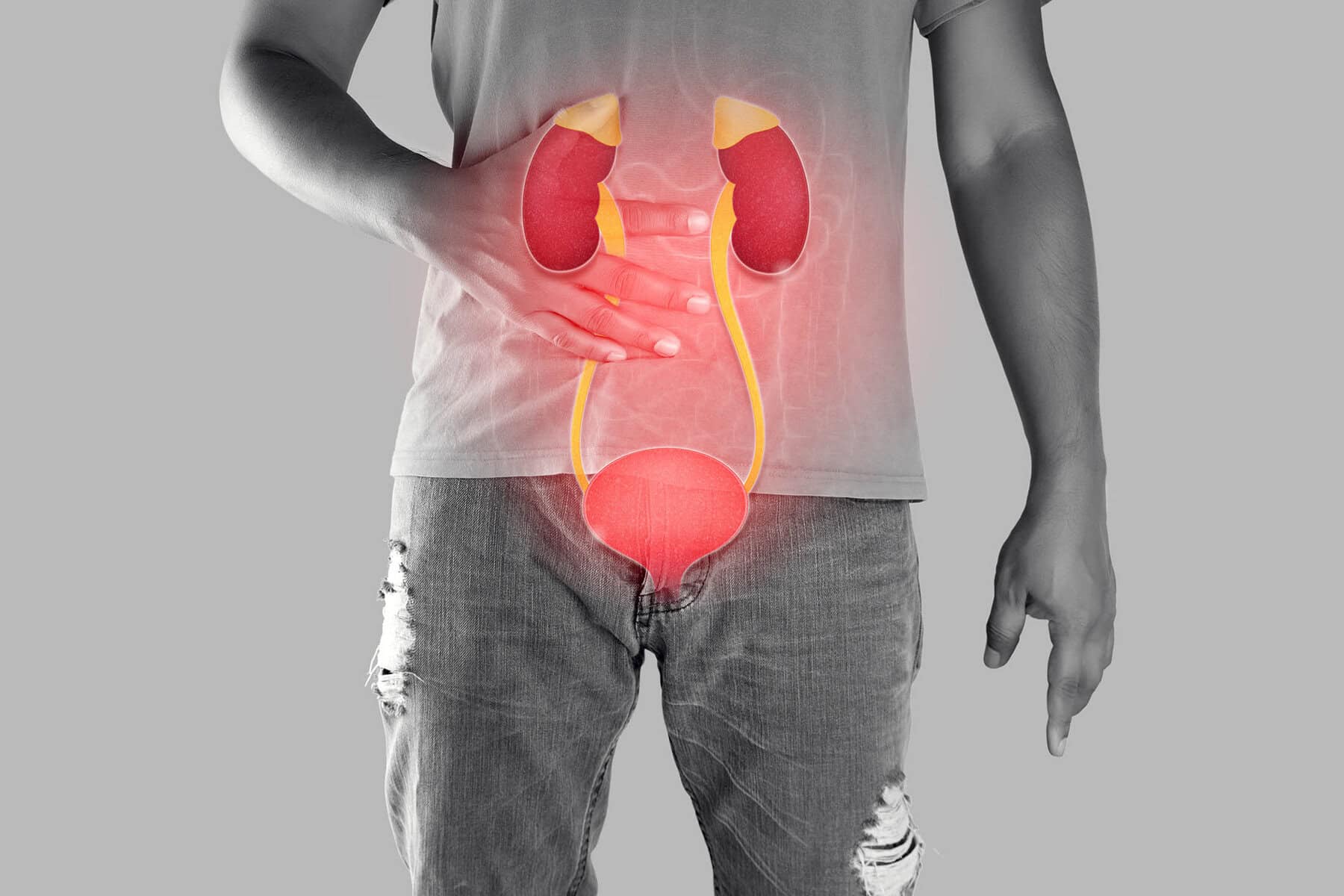
Recognising a urethral stricture
Weak or spraying stream
A slow, weak or split urinary stream, often requiring straining to begin or maintain flow.
Incomplete emptying
A sensation that the bladder has not fully emptied and needing to return to the toilet soon after finishing.
Complications
Recurrent urine infections or acute difficulty passing urine, which requires prompt assessment.
What causes a urethral stricture?
Scar tissue narrows the urethra for several possible reasons.
Injury
Trauma such as straddle injuries or pelvic fractures can lead to scarring.
Infection and inflammation
Previous infections and inflammatory skin conditions can cause scar formation.
Previous procedures
Catheters, instrumentation or prior surgery involving the urethra may contribute.
From investigation to treatment
Evaluation combines flow testing, direct visualisation and imaging. Together these define the length and position of the narrowing.
Not all strictures are the same. Treatment is matched to the characteristics of your stricture rather than applied routinely.
For a first and short stricture, minimally invasive options may be reasonable. For recurrent or longer strictures, reconstructive surgery often provides the most durable outcome.
How we assess a urethral stricture
Flow rate test
A simple and non-invasive test measures the strength and pattern of your urinary stream.
Flexible urethroscopy
A thin camera is passed into the urethra to inspect the narrowing directly.
Imaging
Contrast imaging or scanning maps the length and exact position of the stricture before treatment.
Urine testing
A urine sample checks for infection, which may accompany a stricture. Not every patient needs every test. Assessment is tailored to your symptoms and findings.
Our stricture treatments
The right treatment depends on the length, position and cause of the stricture, and whether it is the first or a recurrence. Your consultant will recommend the most appropriate option.
Urethral dilatation
Gentle stretching of the narrowed segment. Provides relief but recurrence is common.
Optical urethrotomy
An internal cut under direct vision to open the stricture. Effective initially but recurrence is frequent.
Optilume
Dilatation combined with medication to reduce re-scarring. A minimally invasive option for selected recurrent strictures.
Urethroplasty
Surgical reconstruction of the urethra. The most durable and often curative treatment for longer or recurrent strictures.
Choosing the right treatment
There is no single best treatment for every stricture. The correct approach depends on:
- Length of the stricture
- Location within the urethra
- Cause
- Whether it is a first presentation or recurrence
Accurate assessment is the essential first step.
For short and first-time strictures, minimally invasive procedures may be appropriate. For recurrent strictures, urethroplasty often offers the best long-term outcome and can end the cycle of repeated interventions.
Your consultant will explain the benefits and durability of each option so you can make an informed decision.
Why choose The Forbury Clinic for urethral stricture treatment in Newcastle?
Accurate diagnosis first
Precise assessment of length, location and cause guides the right treatment choice.
Full range of options
From minimally invasive procedures to definitive reconstruction.
Honest discussion of durability
Clear explanation of recurrence rates and when reconstruction is advisable.
Consultant-led direct access
Assessment and treatment by an experienced urologist with self-referral welcome.
Frequently asked questions
What are the symptoms of a urethral stricture?
A slow, weak or spraying urinary stream, straining to pass urine, incomplete emptying and recurrent urinary infections.
Will a stricture keep coming back?
Minimally invasive treatments often relieve symptoms but recurrence is common. Urethroplasty offers a far more durable and often permanent result for recurrent or longer strictures.
How is a stricture diagnosed?
Through urinary flow testing, urethroscopy and imaging to define the exact length and position.
Is urethroplasty worth it over repeated dilatations?
For recurrent strictures, often yes. Although it is a larger procedure, it can provide a durable and often curative outcome.
Do I need a GP referral?
No. You can self-refer and book directly.

Book your urology consultation today
Consultations are available to book online for patients with or without a GP referral. Our private specialists provide world-class care in a discrete environment.
- AppointmentBook a consultation
- Reception01189207055
- Location
The Beverley Hospital, The Edge, Fifth Ave, Team Valley, Gateshead NE11 0XA