Metabolic Assessment for Renal Stone Disease Newcastle
Kidney stones commonly recur, but recurrence is far from inevitable. A metabolic assessment for renal stone disease identifies why your stones form and provides a tailored prevention plan to substantially reduce the risk of going through it all again.

Why prevention matters
Treating a kidney stone addresses the immediate blockage or pain. It does not explain why the stone formed in the first place.
Because kidney stones commonly recur, prevention is one of the most important aspects of stone care and one that is often overlooked.
A metabolic assessment for renal stone disease investigates the underlying factors that make you prone to stone formation. This typically includes:
- Blood tests
- Detailed urine analysis
- Review of your diet and medical history
- Analysis of any stone that has been passed or removed
The type of stone matters. Calcium oxalate, uric acid and other stone types each have different drivers and different prevention strategies.
From this information, your consultant builds a personalised plan. For many people this centres on improved hydration and specific dietary adjustments. In some cases medication is prescribed to correct a defined metabolic tendency.
The aim is clear: to understand your personal risk and reduce it so that a stone becomes a one-off event rather than a recurring problem.
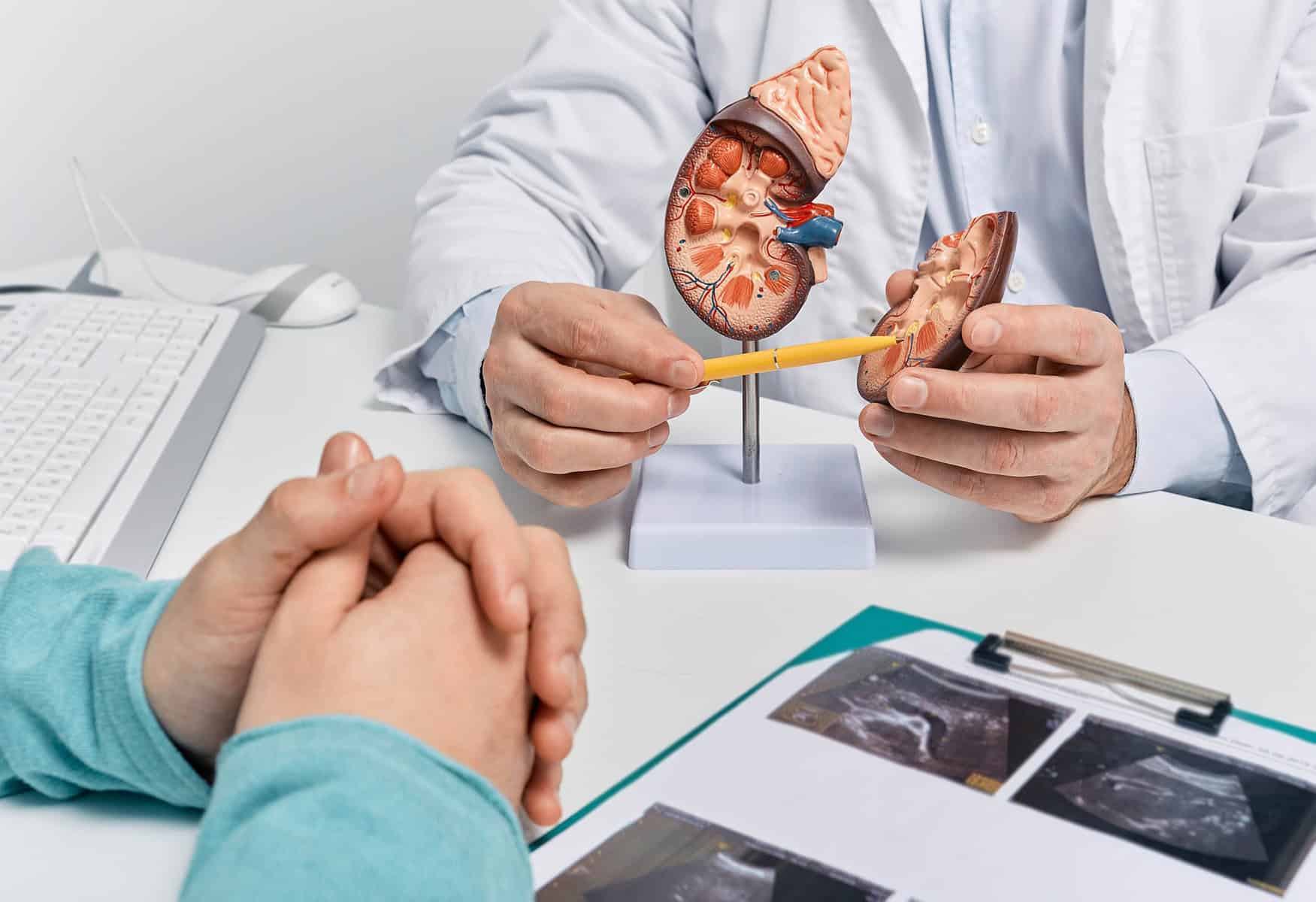
Understand, then prevent
Stone prevention follows a structured approach.
Metabolic assessment
Blood and urine tests identify abnormalities in calcium, oxalate, uric acid or other factors that contribute to stone formation.
Tailored prevention plan
A plan is created based on your results. This may include hydration targets, dietary advice and medication where appropriate.
Reduced recurrence
Following the plan significantly lowers the likelihood of forming further stones over time.
Who a metabolic assessment for renal stone disease may suit
A prevention assessment is particularly valuable for people who:
- Have had one or more kidney stones
- Want to reduce the risk of future episodes
- Have a family history of stones
- Have recurrent or complex stone disease
- Prefer an evidence-based personalised plan
Even after a first stone, many people choose assessment to reduce the chance of a second.
What to expect
- Assessment
Your consultant arranges blood and urine tests and reviews your dietary habits and medical background. If available, a passed stone is analysed. - Your prevention plan
Based on the results, a tailored strategy is developed. This may involve hydration targets, dietary adjustments or medication. - Follow-up
Progress is reviewed over time and the plan adjusted where needed to maintain protection.
Why choose The Forbury Clinic for metabolic assessment for renal stone disease in Newcastle?
Addresses the underlying cause
Looks beyond the stone itself to the metabolic factors driving recurrence.
Personalised plan
Recommendations are based on your own results rather than generic advice.
Often simple measures
Hydration and focused dietary changes can make a substantial difference for many people.
Consultant-led oversight
Assessment and prevention planning are guided by a urologist with expertise in stone disease.
From stone treatment to prevention
A metabolic assessment complements active stone treatment.
Not every patient requires the same level of investigation. Testing is proportionate to your history and recurrence risk.
The goal is long-term reduction in stone formation rather than repeated cycles of acute treatment.
Frequently asked questions
Do kidney stones really come back?
Yes. Recurrence is common. Understanding why your stones form and following a tailored prevention plan significantly reduces this risk.
What does a metabolic assessment involve?
It usually includes blood tests, urine testing, dietary review and analysis of any stone that has been retrieved.
Will I need medication?
Not always. Many people benefit primarily from hydration and dietary changes. Medication is used when a specific metabolic abnormality is identified.
Is prevention worthwhile after just one stone?
Many people choose assessment after their first stone to reduce the chance of recurrence. Your consultant will advise based on your individual risk profile.
Do I need a GP referral?
No. Self-referral is welcome and appointments can be arranged directly.

Book your urology consultation today
Consultations are available to book online for patients with or without a GP referral. Our private specialists provide world-class care in a discrete environment.
- AppointmentBook a consultation
- Reception01189207055
- Location
The Beverley Hospital, The Edge, Fifth Ave, Team Valley, Gateshead NE11 0XA