PSA Blood Test Newcastle
A simple blood test that measures prostate-specific antigen, known as PSA. It is a useful first indicator of prostate health. Results are explained clearly and in context, including the important fact that a raised PSA has many causes other than cancer.

What is the PSA test?
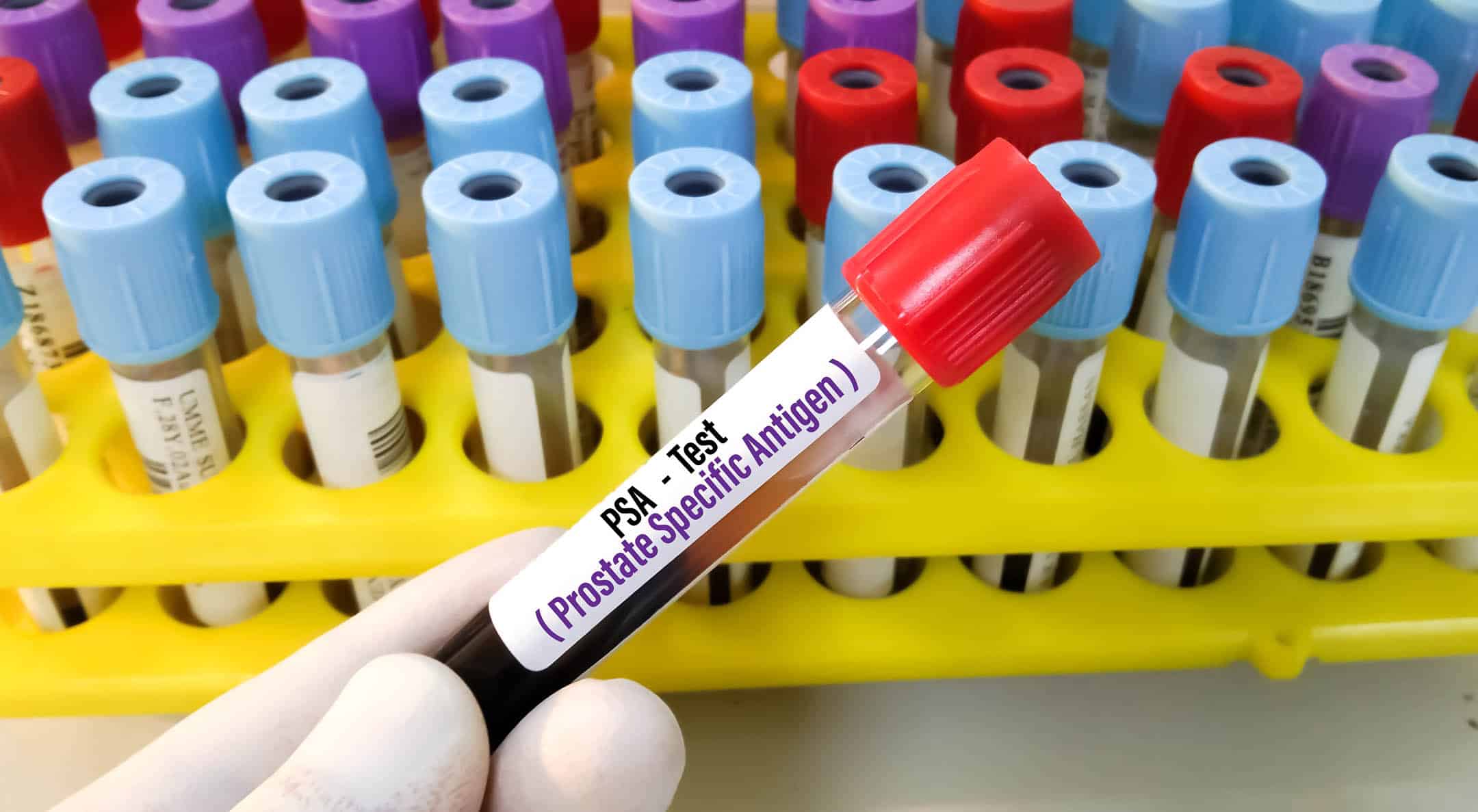
PSA stands for prostate-specific antigen, a protein produced by the prostate gland. It can be measured with a straightforward blood test.
Higher PSA levels can be associated with prostate conditions, including prostate cancer. For this reason, the PSA blood test in Newcastle is often the first step in assessing prostate health.
It is important to understand that PSA is a useful but imperfect test.
A raised PSA does not mean you have cancer. Levels can rise due to:
- A benign enlarged prostate
- Urinary tract infection
- Recent vigorous exercise
- Recent ejaculation
- Prostate inflammation
Equally, some men with prostate cancer have a PSA within the normal range.
For these reasons, a PSA result is always interpreted alongside your age, medical history, examination findings and any changes over time. It is never read as a single number in isolation.
A first indicator, read in context
Understanding the PSA test means recognising both its strengths and its limits.
A simple blood test
PSA measurement requires only a standard blood sample. It is quick and minimally intrusive.
Raised does not equal cancer
A higher reading prompts further assessment but does not confirm a diagnosis.
Interpreted by a specialist
Results are reviewed by a consultant urologist who considers your personal risk factors rather than relying on a laboratory threshold alone.
Who a PSA blood test may suit
A PSA test may be useful for men who:
- Want an initial indicator of their prostate health
- Are considering proactive prostate checks
- Have urinary symptoms being investigated
- Are monitoring a previously raised or borderline result
- Have risk factors such as family history or Black ethnicity
Assessment helps determine whether PSA testing is appropriate in your situation.
What to expect
- The blood test
A blood sample is taken. In most cases no special preparation is required, although your consultant may advise avoiding ejaculation or vigorous exercise for a short period beforehand. - Interpretation
Your result is reviewed in context, taking into account your age, history and any examination findings. - Next steps
Your consultant explains clearly what the result means. If further investigation is appropriate, such as a prostate MRI, this can be arranged without delay.
Why choose The Forbury Clinic for a PSA blood test in Newcastle?
Quick and straightforward
A simple blood test providing an important first indicator of prostate health.
Honest interpretation
Clear explanation of what PSA can and cannot tell you.
Read in context
Results are considered alongside your individual risk factors and history.
Clear onward pathway
If further investigation is sensible, arrangements are made promptly with consultant oversight.
From result to plan
PSA is often the starting point rather than the final answer.
Not every raised PSA leads to further testing. Decisions are based on the level, your age, rate of change over time and overall risk profile.
Where additional investigation is recommended, modern pathways often include MRI before considering biopsy. Where PSA is stable and reassuring, monitoring may be all that is required.
Frequently asked questions
Does a high PSA mean I have prostate cancer?
No. PSA can rise for many benign reasons including enlargement, infection and recent activity. A raised result is a prompt for assessment rather than a diagnosis.
Can I have prostate cancer with a normal PSA?
Yes. PSA has limitations and is not perfectly sensitive. It is interpreted alongside other information.
Do I need to prepare for the test?
Usually no special preparation is required. Your consultant may advise avoiding ejaculation or heavy exercise shortly before testing.
What happens if my PSA is raised?
Your consultant will explain possible reasons and discuss whether further investigation such as MRI is appropriate.
Do I need a GP referral?
No. Self-referral is welcome and you can book directly.

Book your urology consultation today
Consultations are available to book online for patients with or without a GP referral. Our private specialists provide world-class care in a discrete environment.
- AppointmentBook a consultation
- Reception01189207055
- Location
The Beverley Hospital, The Edge, Fifth Ave, Team Valley, Gateshead NE11 0XA