If you have been advised to have a skin biopsy, it is natural to have questions. You may be wondering what the procedure involves, whether it will be painful and how long results take. A skin biopsy is a common and important step in diagnosing a wide range of skin conditions, from benign growths to suspected skin cancer.
Here we explain the full skin biopsy process, from initial consultation through to biopsy histology results, so you know exactly what to expect when booking a private skin biopsy Reading appointment at The Forbury Clinic.
What Is a Skin Biopsy and Why Is It Done?
A skin biopsy involves removing a small sample of skin so it can be examined under a microscope. This laboratory examination, known as biopsy histology, allows a precise diagnosis to be made.
Biopsies are typically recommended when:
- A mole has changed in size, shape or colour
- A skin lesion looks unusual
- A rash is not responding to treatment
- There is concern about possible skin cancer
- The diagnosis is uncertain from clinical examination alone
While some lesions can be confidently diagnosed by appearance, others require microscopic analysis to confirm whether they are benign or malignant.
Consultant dermatologist Sacha Goolamali performs biopsies at The Forbury Clinic as part of a structured diagnostic pathway.
Do I Need a Referral for a Private Skin Biopsy?
No. You can self-refer for a private skin biopsy Reading appointment. A GP letter is not required.
This is particularly helpful for patients who have noticed a change and want clarity without delay. Early assessment often reduces anxiety and ensures that, if treatment is needed, it can be arranged promptly.
The Consultation: Before a Biopsy Is Recommended
Not every suspicious lesion requires immediate biopsy. The first step is a detailed dermatology consultation.
During your appointment, Sacha Goolamali will:
- Examine the lesion carefully
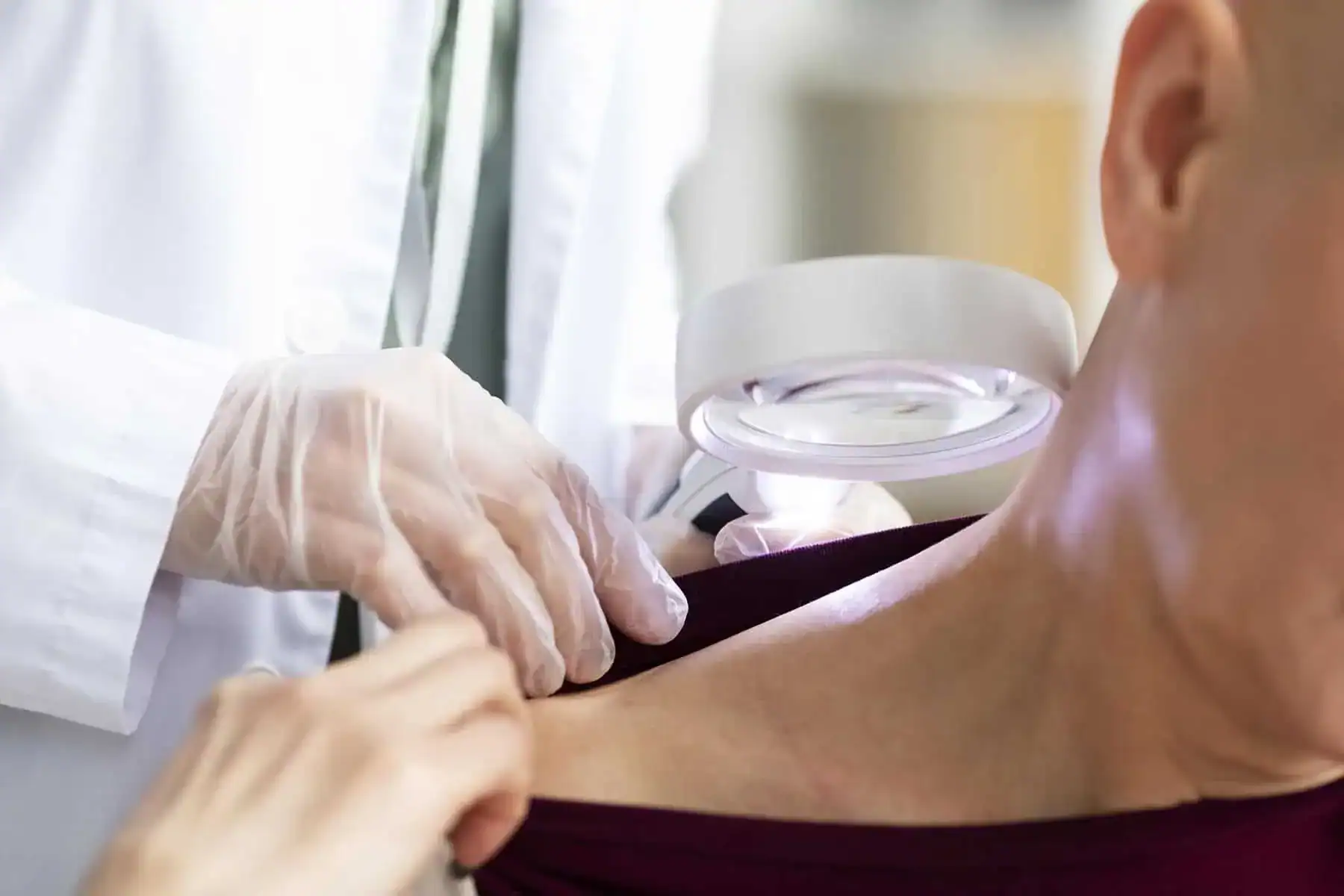
- Use dermoscopy (magnified skin examination) if appropriate
- Review your medical history
- Discuss any recent changes
- Assess your overall skin risk profile
In some cases, reassurance alone is sufficient. In others, a biopsy is the most appropriate next step.
If removal is required for both diagnostic and treatment purposes, you may also explore options for mole removal as part of the same visit.
The Procedure: Shave Biopsy or Excision Biopsy
The type of biopsy recommended depends on the lesion’s size, depth and suspected diagnosis.
Broadly, there are two main approaches:
Shave Biopsy
A shave biopsy removes the raised portion of a lesion using a specialised surgical blade. It is often used for:
- Raised moles
- Superficial skin cancers
- Benign growths
The area is numbed with local anaesthetic. Once numb, the lesion is gently shaved off. Stitches are not usually required.
Excision Biopsy
An excision biopsy removes the entire lesion, including a small margin of surrounding skin. This method is commonly used when melanoma or deeper pathology is suspected.
After local anaesthetic is applied, the lesion is cut out completely and the wound is closed with stitches.
If you would like a detailed comparison, read our guide on shave biopsy vs excision removal for mole removal.
Both approaches are performed in clinic under local anaesthetic and typically take 20–40 minutes.
For a broader overview of procedural options, see our guide to skin lesion removal in Reading.
Is a Skin Biopsy Painful?
The procedure is performed under local anaesthetic. You may feel a brief sting from the injection, but once the area is numb, you should not feel pain during the biopsy itself.
After the procedure, mild tenderness or soreness can occur for a few days. This is usually manageable with simple pain relief.
Aftercare: How Is the Biopsy Site Cared For?
Aftercare depends on the type of biopsy performed.
For a shave biopsy:
- The site may be covered with a small dressing
- It will heal gradually over 1–2 weeks
- Keeping the area clean and dry is important
For an excision biopsy:
- Stitches are usually removed after 7–14 days
- You will receive clear wound care instructions
- Strenuous activity may be temporarily limited
Your dermatologist will provide tailored aftercare advice based on the location and size of the biopsy.
Patients often ask, “How is a biopsy site cared for afterwards?” The key principles are cleanliness, avoiding strain on stitches and monitoring for signs of infection.
Results: What Happens After the Biopsy?
All biopsy samples are sent to a specialist laboratory for histological examination.
How Long Does It Take to Get Skin Biopsy Results?
Biopsy histology results typically take 5–10 working days, depending on the complexity of the analysis. You will be contacted once results are available.
If further treatment is needed, it will be discussed promptly.
What Do Biopsy Results Actually Show?
Biopsy histology provides detailed information about:
- Whether the lesion is benign or malignant
- The specific type of skin condition
- The depth and margins of any cancer detected
- Whether further excision is required
In many cases, the biopsy confirms a benign diagnosis, providing reassurance. If malignancy is identified, early detection significantly improves treatment outcomes.
What If the Result Shows Skin Cancer?
If a biopsy confirms skin cancer, the next step depends on the type and stage.
For some lesions, the biopsy itself removes the entire abnormal area. For others, a further procedure may be required to ensure complete clearance.
Because histology provides precise information, treatment can be tailored accurately.
Why Private Biopsy Access Matters
Choosing a private skin biopsy Reading appointment offers several advantages:
- Self-referral – no GP letter required
- Same-week appointments available
- Consultant-led assessment
- Clear written results
- Prompt follow-up planning
For patients anxious about waiting, this can provide significant reassurance.
When Should You Consider a Skin Biopsy?
You may benefit from biopsy assessment if:
- A mole has changed shape, size or colour
- A lesion bleeds or crusts
- A persistent rash is not improving
- You are unsure about a new skin growth
- A GP has recommended further investigation
Early assessment allows accurate diagnosis and appropriate management.
Book Your Private Skin Biopsy in Reading
If you are concerned about a mole or skin lesion, or have been advised to have a biopsy, book directly with The Forbury Clinic.
Consultant dermatologist Sacha Goolamali performs all biopsies in clinic, with full histology included where clinically appropriate.
To arrange a consultation or discuss whether a biopsy is needed, contact The Forbury Clinic today.